amsight leads ESA project to speed qualification of 3D-printed space components
amsight leads ESA project to speed qualification of 3D-printed space components
amsight has been selected to lead the ESA DIQAM project, which seeks to accelerate the qualification of 3D-printed space components through a digital qualification framework. The project aims to make the qualification process faster, more data-driven, and reusable across future builds. It involves developing a Digital Part Qualification File and a software prototype for automated data ingestion and statistical evaluation. The framework will be validated using two industrial demonstrators, including an ArianeGroup Phase Change Material container and an ISPTech 4U propellant tank.
The DIQAM project aims to streamline the qualification process for 3D-printed space components by creating a digital qualification framework that integrates process data, material information, and inspection results. This approach could reduce redundant testing and improve data reuse across the additive manufacturing supply chain.
Source: Robotics & Automation News · Read original article ↗
amsight has been selected to lead “DIQAM – Digital Qualification Framework for Additively Manufactured Space Components”, an ESA FIRST! project focused on making the qualification of 3D-printed space hardware faster, more data-driven, more transparent, and easier to reuse across future builds and projects.
The 12-month project, that started in September 2026, is supported by the ESA Future Space Transportation (FLPP) team and sits within the ESA FIRST! initiative of simulation and intelligence technologies for space transportation.
The project will also be presented at the ESA Future Space Transportation Autumn Session 2026 on October 14th in Paris.
The project addresses one of the most important challenges industrial additive manufacturing is facing: qualification.
Additive manufacturing – also known as 3D printing – can produce lighter, more efficient, and more complex components for launchers, propulsion systems, and other demanding applications.
But qualification remains slow, conservative, and document-heavy, often relying on static reports, extensive inspection, CT scans, companion specimens, and manual evidence assembly.
DIQAM addresses this bottleneck by developing and validating a Digital Qualification Evidence Framework that connects process data, material and powder information, machine and sensor data, post-processing records, CT inspection results, and mechanical test evidence into a reusable digital qualification chain.
Within the project, a space-specific reference specification, a Digital Part Qualification File, and a software prototype for automated data ingestion, evidence aggregation, and statistical evaluation across the AM supply chain will be developed.
The project consortium brings together software, launcher, propulsion, manufacturing, materials and research expertise. Partners are ArianeGroup, InSpacePropulsion Technologies, APWORKS, Bimo Tech, and Fraunhofer IAPT.
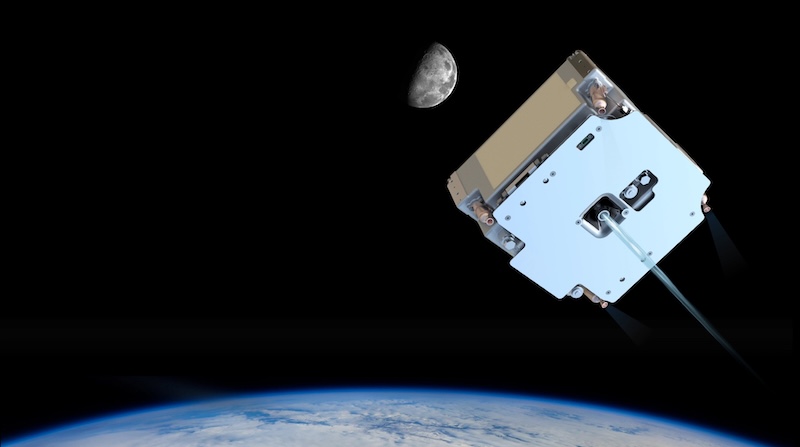
The framework will be validated using two industrial demonstrators, an ArianeGroup Phase Change Material container for Ariane 6, and an ISPTech 4U propellant tank for a CubeSat propulsion system.
Daniel Chipping, systems engineer at ESA, says: “The DIQAM project is important for us at ESA because it develops a digital qualification framework that can systematically reuse qualification data, reduce redundant inspection and testing, and accelerate certification, enabling realistic and efficient use of additive manufacturing for European space systems.”
Tim Wischeropp, CEO of amsight, says: “Being selected to lead this ESA FIRST! project is an important milestone for amsight.
“It confirms that the market’s next challenge is not simply producing AM parts, but proving them efficiently, consistently, and with data that can be reused. That is exactly where digital quality management becomes critical.”
André Dröse, lead advanced technologies, materials and concepts at ArianeGroup, says: “A standardized digital file format that enables us to easily access, validate and reuse qualification data from different suppliers would allow us a significant improvement of our statistical database.
“Finally, this would significantly reduce testing efforts in the future by increasing confidence in the AM process.”
Lukas Werling, CEO and co-founder of ISPTech, says: “For us as an Space Mobility Company, validating the quality of AM components from our suppliers is currently a manual and time-consuming process.
“Relevant information is often buried in extensive PDF reports, making it difficult to access, validate, and reuse. It is nearly impossible to compare data consistently across different suppliers and sources.
“Through this project, we will establish a standardized digital file format that enables us to easily access, validate, and reuse qualification data from different suppliers.
“This will allow us to build a robust statistical database, increase confidence in the AM process, and ultimately reduce testing efforts.
“Space propulsion is a critical subsystem of every spacecraft, via a standardized file formats across the whole process we assure high quality, traceability and fast iterations.”
Andreas Funcke, CTO at APWORKS, says: “Being able to provide our customers with quality evidence for their parts in a digital and standardized format will make our lives as contract manufacturer much easier in the future.
“Today, compiling and interpreting all the quality evidence for a single part can take several hours. With DIQAM, we aim to reduce this effort to just one click.”
The relevance of the project goes beyond space. The same pain exists across regulated AM production – scattered evidence, manual reporting, repeated qualification effort, and limited reuse of quality knowledge.
DIQAM targets a new model where quality evidence is structured, machine-readable, and useful for statistical process control.
Peter Lindecke, CCO at amsight, says: “Customers in regulated sectors do not want more files.
“They want confidence. They want to know that powder, process, inspection, and test data are connected, traceable and available for decisions.
“DIQAM is a space project, but the lesson applies to every manufacturer trying to move AM from capable to dependable production.”
By leading DIQAM, amsight reinforces the position of its software as a digital quality backbone for industrial additive manufacturing, helping manufacturers build the evidence chain needed for qualification, audit readiness, process stability, and scalable production.

Source:Robotics & Automation News · roboticsandautomationnews.com