Epson Europe study shows SCARA robots face integration hurdles despite high interest
New research from Epson Europe indicates that while 44% of European manufacturers show strong interest in SCARA robots for repetitive tasks, integration with existing production lines remains the primary barrier. The report highlights that skills shortages and complex deployment processes significantly delay adoption, prompting a call for simpler, AI-enabled automation solutions to bridge the gap between available technology and workforce capabilities.
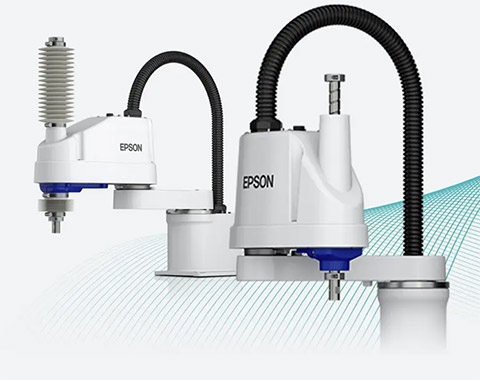
Repetitive handling tasks present a clear opportunity for automation, with SCARA robots offering the speed, precision, and consistency these applications demand. The research reveals that 44% of manufacturers with European operations are already using, implementing, or considering SCARA robots, indicating strong interest in the technology.
There is also considerable room for growth. Pick-and-place is the leading potential application at 31%, followed by packaging at 24%. Together, these two processes account for 55% of respondents, giving SCARA suppliers a clearly defined initial use case around fast, repetitive product and component handling.
Ease of integration is the biggest barrier
However, the challenge comes into focus when manufacturers consider how robots can work alongside existing production lines. Integration with existing production is one of the biggest barriers to robot adoption, cited by 21% of respondents. At the same time, 31% said that simpler integration is the clearest way to encourage adoption, more than twice the next most frequently cited specific factor, intuitive or low-code programming (13%).
All-in-one systems with integrated controllers were cited by 9%. High-speed precision was prioritised by 7%, highlighting the importance of making SCARA robots’ performance benefits easier to access through simpler deployment.
Skills shortages make integration harder
The preference for easier implementation is closely linked to skills shortages. Recruiting automation or engineering specialists is the greatest workforce challenge for 43% of respondents. Skills shortages are delaying projects for 22%, while 18% say they make integration harder. In other words, a lack of specialist expertise directly adds to the complexity of integrating robots.
Confidence in internal capabilities reflects this pressure: only 14% are very confident their business has the skills needed to implement and support industrial robots, while 45% are not very or not at all confident.
AI-enabled automation to reshape skills requirements
More than two-thirds (69%) of respondents expect AI-enabled automation to increase or change the skills their workforce needs over the next three years, with 26% saying it will widen the existing skills gap. Only 13% think it will reduce the need for specialist skills. Together, these findings point to the value of making integration and programming simpler, so that adopting automation is more manageable for businesses with limited engineering resources.
“SCARA robots represent a significant opportunity for manufacturers to improve productivity and efficiency across established production processes,” said Volker Spanier, Head of Robotics Solutions at Epson EMEAR. “However, integration challenges and skills shortages continue to hold back investment in industrial automation. Making automation more accessible and demonstrating how SCARA robots can deliver value within existing operations will be key to helping manufacturers move forward with confidence, accelerate adoption and unlock further opportunities for factory floor innovation.
“For many established production tasks, SCARA robots deliver the speed and precision manufacturers need,” Spanier concludes. “Simpler integration and programming will empower manufacturers to apply that capability where it will deliver the clearest operational benefit. In the current economic environment, these are essential capabilities for any manufacturer focused on maximising efficiency.”