ETH Zurich unveils InvisiSpeech, a tiny intraoral sensor enabling silent AI commands via tongue vibrations with 90% accuracy in noisy settings; further work needed for natural conversations
ETH Zurich researchers developed InvisiSpeech, a miniature wearable sensor placed between a molar and cheek that detects tongue vibrations to transmit silent commands wirelessly to a smartphone AI model. Tested on 15 participants, it recognized ~90% of 50 predefined English commands with minimal calibration and low sensitivity to background noise. While currently limited to predefined commands, the system aims to enable private, natural conversations with AI assistants in public or noisy environments without implants or surgery.
Researchers at ETH Zurich in Switzerland have developed a miniature wearable sensor that enables users to communicate with artificial intelligence without speaking aloud or moving their lips.
Called InvisiSpeech, the device fits between a back molar and the cheek, detecting the subtle vibrations generated when users silently form words with their tongues.
These signals are transmitted wirelessly to a smartphone, where an AI model decodes them into commands.
The technology has been developed by researchers at ETH Zurich’s Sensing, Interaction & Perception Lab (SIPLAB), led by Christian Holz, professor of computer science.
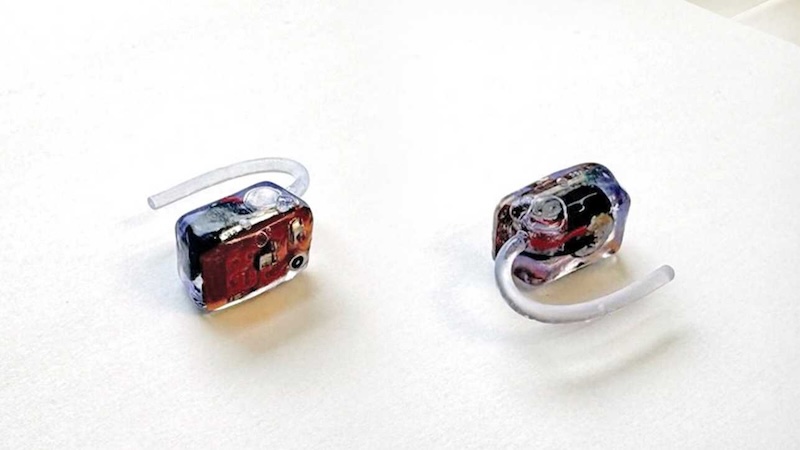
The device resembles a small dental brace and contains a sensor, a battery and electronics for wireless data transmission. It remains completely hidden from outside view when worn.
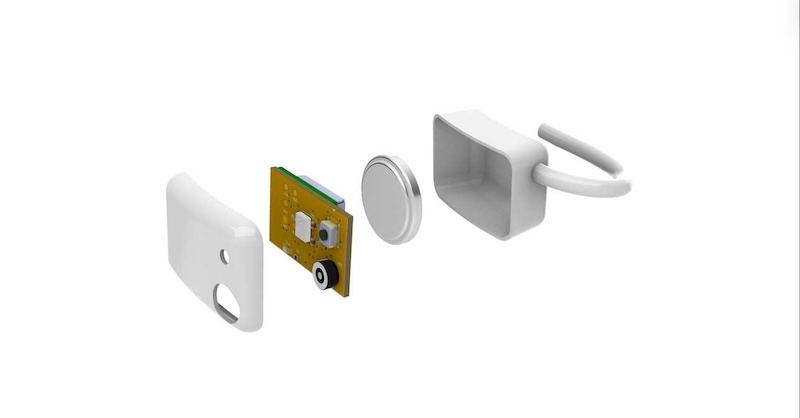
Unlike brain-computer interfaces, InvisiSpeech does not measure brain signals or require implants or surgical intervention.
Yijing Jiang, a doctoral student working on the project, says: “The device itself is so small that it can be worn comfortably in your mouth.”
Silent control of electronic devices
In studies involving 15 participants, InvisiSpeech correctly recognized around 90 percent of 50 predefined English commands, requiring only brief calibration for each individual.
The researchers found that background noise had little effect on recognition accuracy, offering a potential advantage over conventional microphone-based interfaces in noisy environments.
Applications already tested include switching electronic devices on and off, retrieving information during meetings and translating foreign-language content using AI glasses.
Holz says: “InvisiSpeech enables us to interact in fundamentally new ways: the invisible input of commands to an AI via natural language.”
The technology could also provide new opportunities for accessible communication and discreet interaction with wearable computing devices.
Towards natural conversations with AI
The researchers ultimately aim to move beyond predefined commands and enable users to conduct natural, private conversations with AI assistants.
Such a system could operate in a similar way to existing AI voice assistants, but with users silently articulating their questions and receiving spoken responses through earphones.
This could allow people to interact with AI while traveling on public transport, attending meetings or accessing personal information without being overheard.
However, further development is required before the technology becomes practical for widespread everyday use.
Key challenges include recognizing longer and more complex sentences and maintaining reliable performance while users are walking or moving rapidly.
Researchers from Aarhus University in Denmark and Penn State University in the US have also contributed to the development of InvisiSpeech.