OYMotion to Showcase Dexterous Hands and Physical AI Research at Nagoya RoboDEX 2026
From November 25 to 27, 2026, OYMotion Technologies will exhibit its three-jaw gripper, five-finger dexterous hand, and dual-arm systems at the 9th Nagoya RoboDEX in Aichi Prefecture. The company aims to exchange research themes with Japanese universities and corporations regarding Physical AI technologies like vision, tactile sensing, and machine learning. Exhibits include platforms for multi-finger manipulation, closed-loop control using force sensing, and human skill imitation via EMG and motion capture.
Toward joint research and technical exchange with Japanese universities, research institutions, and corporate R&D departments
From research to implementation. Exploring the possibilities of Physical AI together.
From Wednesday, November 25 to Friday, November 27, 2026, OYMotion Technologies will exhibit at the 9th Nagoya RoboDEX, held at the Aichi Sky Expo in Aichi Prefecture.
In this exhibition, we will introduce our three-jaw robot gripper, five-finger dexterous hand, and dual-arm robot system.
We are particularly looking forward to deepening exchanges with universities, national research institutions, and corporate research and development departments in Japan.
A robot's manipulation capability is not determined by its mechanical structure alone.
It is realized through a combination of various technologies, including vision, tactile sensing, motion control, human motion data, and machine learning.
At OYMotion, we are advancing research and development that connects human motion and skills with robot manipulation capabilities through technologies such as robot hands, electromyography (EMG), motion capture, and tactile sensing.
At this RoboDEX, we hope to exchange opinions with researchers and engineers regarding research themes and the construction of experimental environments that utilize these technologies.
Six Research Themes
01 | Dexterous Object Manipulation with Multi-Fingered Robot Hands
Research on robot hands is expanding from simply grasping objects to posture adjustment with fingertips, re-grasping, and coordinated manipulation with multiple fingers.
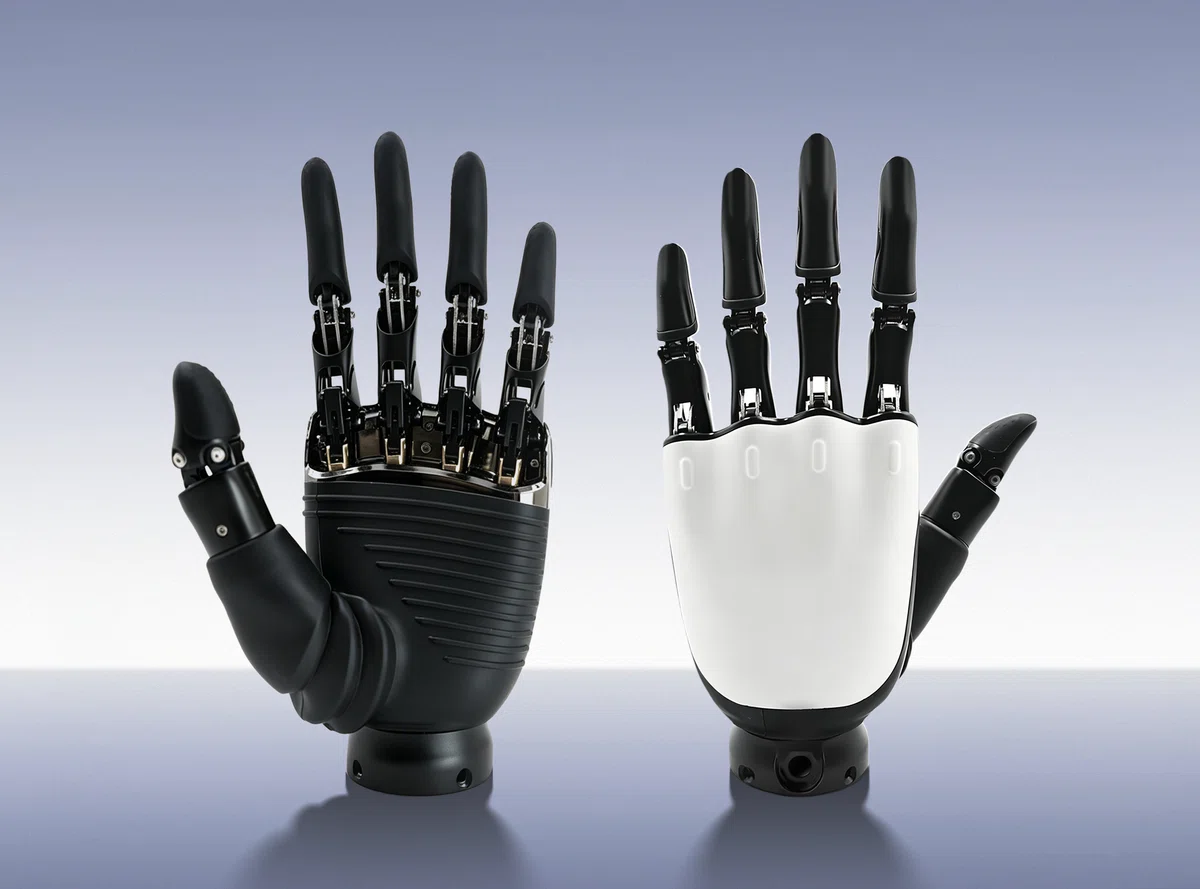
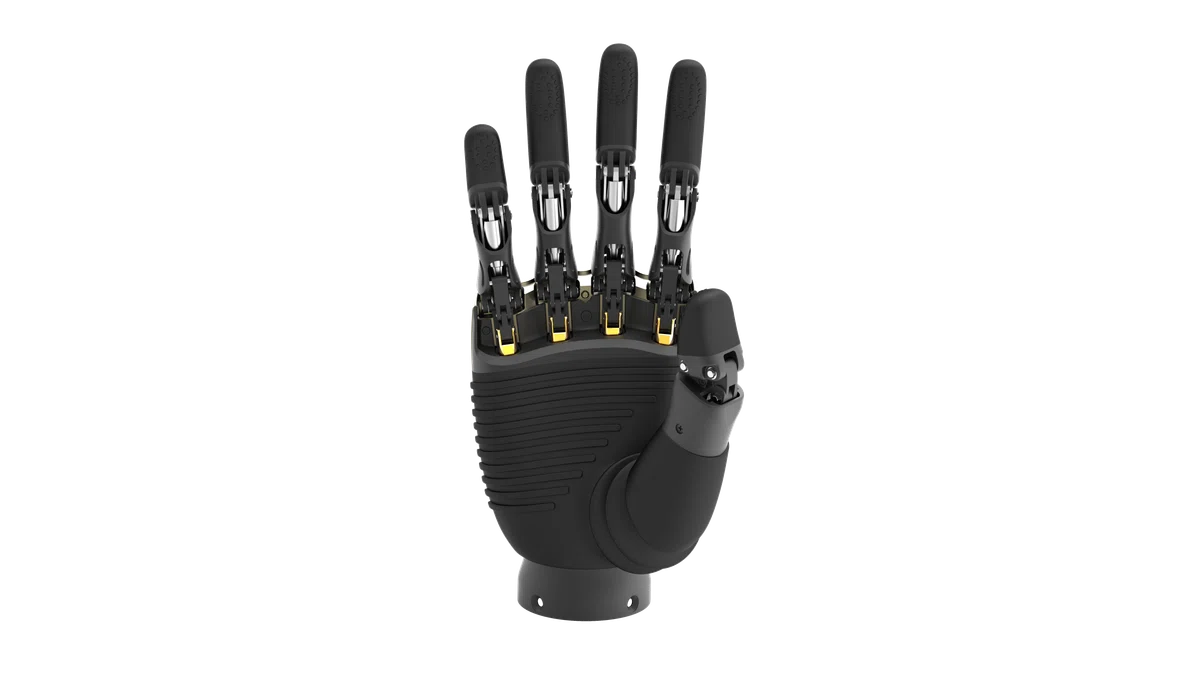
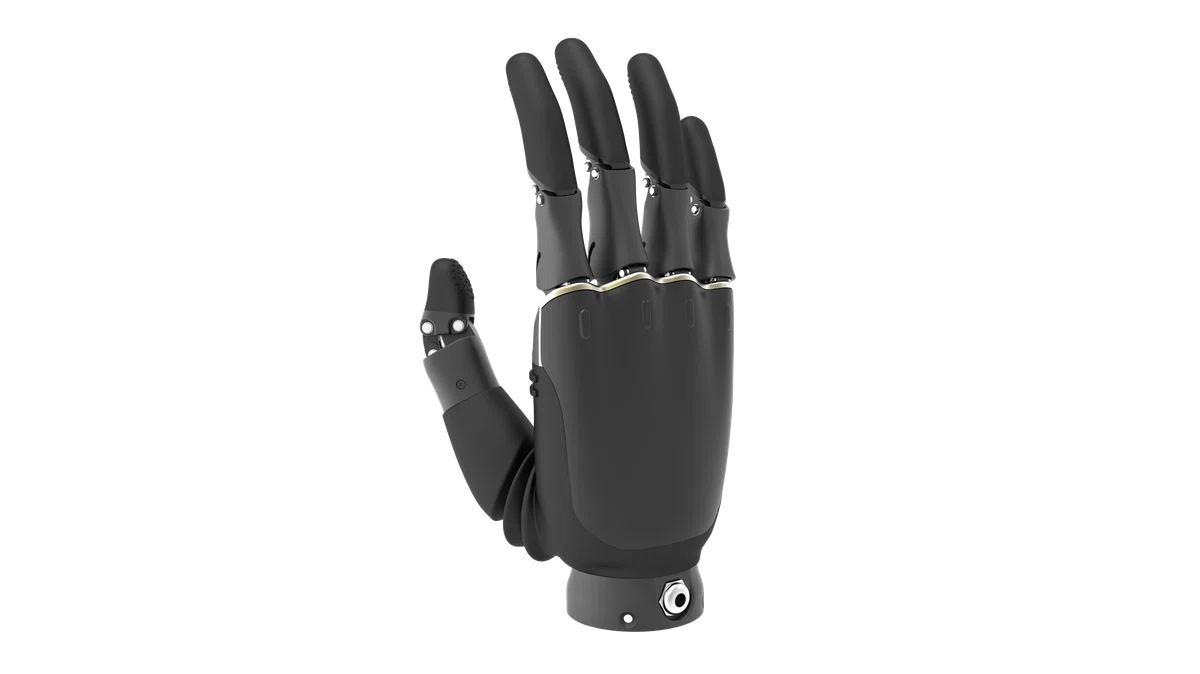
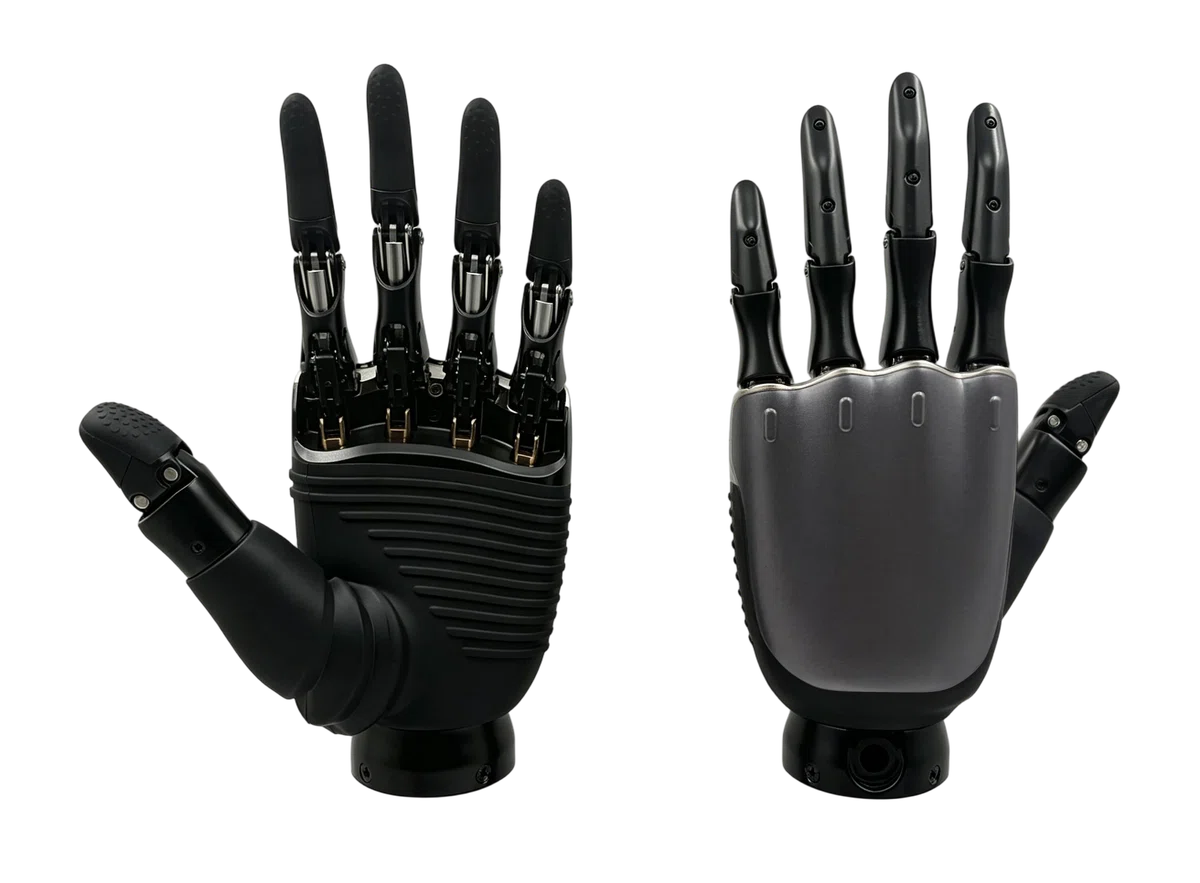
The five-finger dexterous hand serves as an experimental platform for researching contact point planning, coordinated finger control, and object posture modification.
Main Research Themes:
Multi-finger coordinated grasping and contact point planning
In-Hand Manipulation
Grasp generalization for objects of different shapes
Manipulation control based on visual feedback
Relationship between robot hand degrees of freedom and manipulation performance
Research Platform Examples: ROHand A002 / AP001 / AP002
02 | Closed-loop robot control using tactile and force sensing
There are operations that are difficult to judge based on vision alone.
When grasping soft objects or performing tasks while adjusting contact force, robots are required to have the ability to recognize contact states.
Closed-loop control using tactile and force information is an important research direction for addressing these challenges.
Main research themes:
Contact force estimation and feedback control
Slip detection and grasp stability
Manipulation of flexible objects
Visual-tactile fusion
Learning manipulation strategies based on contact information
By utilizing the 3D force sensing capabilities of the ROHand AP002, you can explore robot manipulation experiments that incorporate contact information.
Research platform example: ROHand AP002 + visual/tactile sensing
03 | Human skill data acquisition and imitation learning
Humans perform complex object manipulation on a daily basis.
However, to use these movements for robot learning, multiple challenges must be solved, such as data acquisition, motion conversion, and addressing differences in physical structure.
It is particularly important to distinguish between the following three types of data.
1. Human natural motion data
Data recording operations performed by humans in everyday environments.
2. Motion capture and wearable sensor data
Data obtained by capturing finger movements, electromyography, etc., via sensors, and processed or converted as necessary.
3. Robot teleoperation data
Data recording the joint states and motion trajectories of the robot itself as operated by a human.
These differ in acquisition methods and data structures, and each presents unique challenges for application in learning.
Main research themes:
Human-to-Robot Motion Retargeting
Learning from Demonstration
Data efficiency in imitation learning
Motion conversion between different body structures
Comparison of natural motion data and teleoperation data
Research platform example: Motion capture glove + EMG + ROHand + dual-arm robot
Motion capture glove + ROHand:
04 | Human motion intent interface using electromyographic signals
Electromyographic (EMG) signals obtained from human muscle activity are one source of information for estimating motion intent and operational commands.
Using products such as OYMotion's gForce series, you can research hand motion recognition and robot control based on EMG signals.
Main research themes:
Gesture recognition using EMG
Human motion intent estimation
Wearable Robot Interface
Fusion of EMG and Motion Capture
Remote Control of Robot Hands and Robot Arms
However, electromyographic signals vary by individual and electrode placement, requiring calibration, learning, and evaluation tailored to research objectives.
Research Platform Example: gForce EMG + ROHand + Motion Capture
05 | Dual-Arm Cooperative Manipulation and Robot Skill Learning
Human tasks involve many movements that require the coordination of two hands.
Fixing an object with one hand while manipulating it with the other.
Transferring an object between both hands.
Executing two actions with different roles simultaneously.
To realize such tasks with robots, it is necessary to address dual-arm motion planning, contact control, and the learning of manipulation strategies.
Main Research Themes:
Bimanual Coordination
Object Manipulation with Dual Arms
Tool Use and Cooperative Actions
Dual-Arm Remote Operation
Imitation Learning from Human Bimanual Skills
Research Platform Example: OpenArm + ROHand + Vision/Motion Measurement System
ROHand + Dual-Arm Robot:
06 | Robot Manipulation Datasets and Skill Transfer Between Heterogeneous Robots
In Physical AI research, not only learning algorithms but also data quality, experimental reproducibility, and evaluation methods are crucial.
Different robot hands and arms have varying degrees of freedom, joint structures, control interfaces, and sensor configurations.
Therefore, it is not easy to transfer manipulation data or learned skills acquired on one robot to another.
Main research themes:
Cross-Embodiment Skill Transfer
Standardization of motion data
Construction of robot manipulation datasets
Comparative evaluation of learning algorithms
Benchmarking of manipulation success rates and generalization performance
Comparison of learning effects with different sensor configurations
By utilizing the ROHand development environment and interfaces such as ROS/ROS2, it is possible to construct robot systems tailored to specific experimental objectives.
Actual connection methods and supported features must be verified according to the specific model and configuration used.
Example of a research platform: ROHand + robot control environment + multimodal data collection system
Bridging university research and corporate R&D
07 | Technical exchange with Japanese universities and research institutions
Japanese universities and research institutions possess a wealth of knowledge in diverse research fields, including robotics, mechanical control, artificial intelligence, haptics, ergonomics, and biosignals.
The role of research robots in universities is not necessarily to be immediately introduced into production sites.
To verify new control algorithms.
To compare different sensors and learning methods.
To conduct repeated experiments and accumulate reproducible research results.
And to discover new research challenges.
To achieve this, an experimental platform that can be used flexibly according to research themes is necessary.
OYMotion hopes to deepen technical exchanges with researchers in Japan through robot hands, multi-modal human sensors, dual-arm robot systems, and more.
08 | Joint Verification with Corporate R&D Departments
Corporate R&D departments often evaluate the potential of robot technology from perspectives different from those of universities.
Can research results be utilized for future product development?
Can the necessary performance be achieved under actual working conditions?
Can it be integrated with existing equipment and control systems?
What technical challenges remain for mass production and practical application?
For example, research departments at automotive and parts manufacturers can study complex component manipulation and flexible assembly tasks.
Robot manufacturers can examine the integration of five-fingered hands with arms and new manipulation control methods.
Physical AI companies can consider research on skill learning using human motion data and robot manipulation data.
OYMotion aims to explore possibilities for cooperation on these corporate R&D challenges from the perspectives of experimental platforms, sensor technology, and robot manipulation systems.
09 | From Research Results to Practical Robot Applications
While university research and corporate R&D have different objectives, they are complementary to each other.
Universities explore the potential of new technologies, while companies verify the feasibility of those technologies for specific products and applications.
And the challenges that arise from actual industrial sites lead to the next research themes.
We believe this cycle is essential for the development of Physical AI.
What OYMotion aims for in the Japanese market is not just to provide robot products.
Connecting research challenges, experimental platforms, technical verification, and actual applications.
Through continuous exchange with universities, research institutions, and corporate R&D departments, we hope to expand the possibilities of robot technology together.
We look forward to seeing you at RoboDEX Nagoya
At this exhibition, we welcome interactions with researchers and engineers working in the following fields:
Robot manipulation, Physical AI, imitation learning, dual-arm coordinated control, tactile sensing, EMG interfaces, human motion measurement, robot datasets, and more.
Whether you have specific research challenges or are considering the introduction of an experimental platform, please feel free to stop by.
We look forward to speaking with you directly about your research themes and technical challenges.
Exhibition Information
The 9th RoboDEX Nagoya
RoboDEX Nagoya 2026
Date
November 25–27, 2026
November 25 (Wed) – 27 (Fri), 2026
Time
10:00–17:00
Venue
Aichi Sky Expo
Aichi International Exhibition Center
Exhibitor
OYMotion Technologies
Booth: N24-60
Contact
Ikuo Kojima
Head of Japan Business
OYMotion Technologies
Website: www.oymotion.com
Bridging human skills and robot intelligence.
Entrusting machines with tasks that do not necessarily require human intervention, so that people can focus on what they truly want to do.
OYMotion aims for a future where humans and machines expand each other's potential.
We look forward to seeing you at RoboDEX Nagoya 2026, booth N24-60.
#OYMotion #ROHand #RoboDEX2026 #PhysicalAI #DexterousManipulation #RobotLearning #ImitationLearning #BimanualManipulation #HumanRobotInteraction #RoboticsResearch #JapanRoboticsResearch #RobotHand #RoboDEXNagoya