Volvo Cars trains Hexagon AEON humanoid robots for factory tasks by mid-2027
Volvo Cars is training Hexagon Robotics' 1.65-meter-tall, 60-kg AEON humanoid robots at its Ghent plant to perform precise component placement and other physically demanding tasks alongside workers. The initiative uses imitation learning to prepare the wheeled robots for a larger pilot in mid-2027, aiming to improve safety and flexibility without major infrastructure changes.
Volvo Cars has begun training and testing Hexagon Robotics’ AEON humanoid robots at its manufacturing plant in Ghent, Belgium, with the aim of introducing the machines into production operations by mid-2027.
The Ghent facility is the first Volvo Cars plant to trial humanoid robots, which are being trained to perform repetitive and physically demanding tasks alongside factory workers and existing automation systems.
The initiative forms part of the automotive manufacturer’s wider investment in advanced manufacturing technologies aimed at improving safety, flexibility and operational efficiency.
Volvo Cars’ own manufacturing team is working closely with Hexagon Robotics to train the robots using imitation learning – a technique that enables robots to learn tasks by observing and copying demonstrations.
The initial task involves placing components into two fixtures with a high degree of precision.
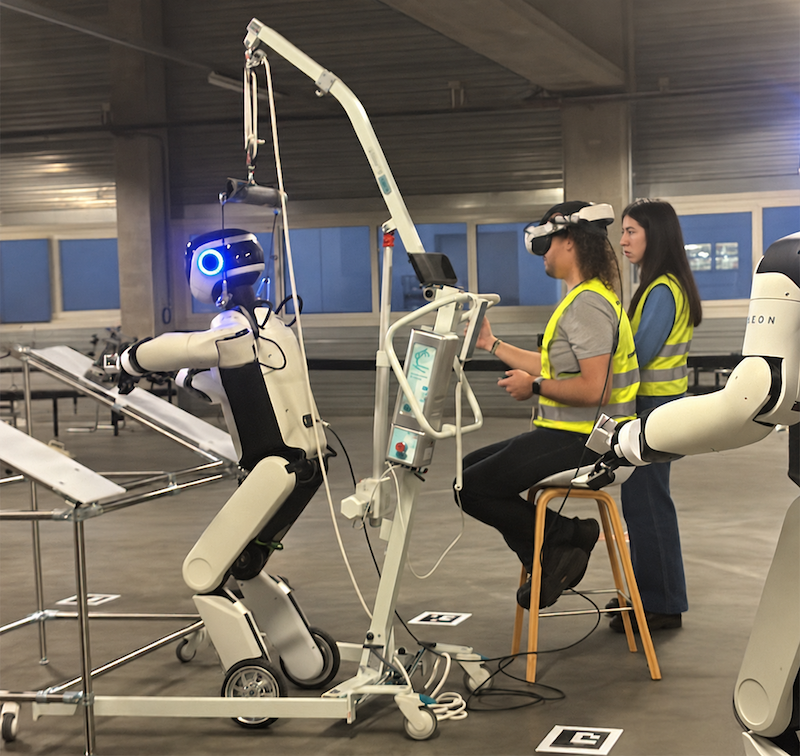
As training progresses, the robots will be introduced to increasingly complex activities, including handling multiple components, navigating production areas and interacting with existing automated systems.
Beyond conventional industrial robots
While industrial robotic arms have been a feature of automotive manufacturing for decades, humanoid robots offer the potential to automate tasks that require greater mobility and flexibility.
Their human-like form also enables them to work within manufacturing environments originally designed around people, potentially reducing the need for extensive changes to factory infrastructure.
Magnus Nilsson, chief manufacturing officer at Volvo Cars, says: “AEON’s humanoid design means it can fit into our production as it is today, alongside our teams and existing automation.
“Our aim is for humanoid robots to take on some of the most physically demanding tasks and help make work more ergonomic for our people.”
Unlike many humanoid robots currently under development, AEON uses wheels rather than legs for locomotion.
The robot stands 1.65 meters tall, weighs 60 kilograms and can carry loads of up to 10 kilograms. It can travel at speeds of up to 2.4 meters per second and uses cameras and sensors to navigate its surroundings and manipulate components.
From training to production
The current training program lays the groundwork for a larger factory pilot scheduled for the first half of 2027, when additional AEON robots will arrive in Ghent to undertake a wider range of manufacturing tasks.
Arnaud Robert, president of Hexagon Robotics, says: “The purpose of humanoid robotics is to deliver business value to our customers.
“Working closely with Volvo Cars’ teams allows us to ensure AEON performs real-world tasks that support their manufacturing process.”
The trials come amid uneven adoption of autonomous technologies across different markets.
According to Hexagon’s Autonomy Unlocked research, just 16 percent of UK respondents reported high or full levels of autonomy at their companies, compared with 29 percent of respondents in China.
Volvo Cars’ program offers an opportunity to examine how humanoid robots can be integrated into established manufacturing operations, with the company targeting their introduction into actual production from mid-2027.